Killian: Who are you, and how did you get my number?
Kang: Peter Kang, co-founder of Kioken, Inc (http://www.kioken.com), and co-founder of Jab Strong Fierce.
Killian: You came to SF as a player first. What drew you to the scene initially?
Everyone has their story of how they started playing, mine is rather mundane. I started playing SF on the Super Nintendo, and didn’t start playing in the arcade till Super came out; it was quite strange having to learn the moves again on the joystick rather than the pad. =) The rather relaxed atmosphere of college afforded me some real playing time by the time Super Turbo came out and I quickly found a new group of friends who I would visit the local Golfland with (Dallas).
I believe my affinity to SF is the same as everyone's. It's the competition, camaraderie, and the strange, odd, and sometimes fascinating people you meet that you would never have unless it were for the arcade. Fast forward to New York City where I came for graduate school and met my eventual business partner playing Street Fighter. Gene (partner) was busy kicking butt with Birdie in Alpha…pretty soon after that chance encounter we decided to start a company together called Kioken.
Several years later we decided to produce a film about the crazy world of SF and the result is Bang The Machine. Having followed alt.games.sf2 for years, it was easy contacting the players such as the Cannons and so forth began the discussion with us on how all of this would be feasible. Ever since that time, we’ve seen the growth and genesis of SRK and the revived tournament scene.
Killian: You love SF, fine, but what got you thinking about a movie? Was there some inspiration driving you put together a film like this, or did the idea emerge more organically?
There are some things in life that can only be described in pictures, and some even better in moving pictures. You've already heard of the stories of how I met my business partner playing SF. Well, they are all true and we have always felt that there was an incredible story to tell here about the SF community. But we needed a spark, a kind of catalyst to get the thing started.
Well, one evening I was in San Francisco for business and decided to venture to SVGL for the first time ever; when I arrived I received a thorough beat down from Choi's V Sak many times over. After that brief encounter I realized that getting access to the legends in the community wouldn't be so hard after all. Some posts on alt.games.sf2, and then a very great intial meeting with Tamara Katepoo, our Director, got the ball rolling. Sometimes, the obstacle to getting started is well...getting started.
Killian: Though you work in media, you have no prior experience with film. Was that a major liability?
In our case, ignorance and naivete were essential in this large creative endeavour of filmmaking. The more you know about it, the less you will want to do it. The payoffs are rare and in most cases never materialize...so if you are thinking about ever doing it make sure you are comfortable knowing that whatever you invest into the project (time, money, blood sweat and tears) will most likely vanish into the winds. However, if your efforts are seen by many you will have accomplished the task of communicating what you wanted others to see - that in itself is a monumental achievement.
Killian: What makes you think there's a story here that people outside of SF might care about?
The best parts of BTM have little to do with the game itself. Audiences of all kinds will appreciate the character driven drama and interactions that exist within the players in the film. I also feel very strongly that the project does not make stereotypes of the players as do films such as Trekkies or any other genre driven documentary. Those projects shed little light into the reasons for their obsessions and more often than not wrap the subject matters up into tidy little boxes that can be described in one or two sentences. We strove to show that SF community is more than just an activity people spend a lot of time with, but it's truly a channel through which people can interact and relate to each other on a basis other than the traditional ones of age, race, income, and nationality.
Killian: As players age, there's increasing "pressure" to give these games up (because most Americans seem to think that games are "for kids", despite overwhelming evidence to the contrary). In many ways, players like yourself (and those in the film) are some of the first to move into adulthood while still maintaining a serious commitment to them. What do you think the future holds for non-kids and gaming? Is this a good thing? Why?
The future for non-kids and gaming are obviously console and internet games. It's fastly becoming somewhat of a luxury for someone to age into their late twenties and early thirties and have the time to spend on gaming, let alone SF in the arcade scene. But, as seen by the Cannons and lots of other game players (millions), age has little to do with their involvement with gaming.
It's all a balance of time and resources as we have little time compared to the hours and hours afforded to one during high school or college. I do believe it gets harder for players to compete in the tournament scene if they have little time to play and practice, but other forms of gaming take it's place when it's more convenient to do so. This is highly evident in newer PC games such as Warcraft 3, where your work environment, if it happens to be near or on a computer, is that same environment you can play online games on.
Anyways, the rest of the "normal" world does this all the time, it's called Solitaire. So, I think a healthy mixture of real activity and gaming is fine for most everyone...just get out more. Go to the arcade, go play some ball, go chase some girls (or boys), whatever tickles your fancy =)
Killian: You integrate gaming directly into your corporate culture, even though your company does not produce games. What's the thinking behind this? What are the benefits you see?
The thinking is rather selfish =P I want a fun work environment filled with people like "me"...and that means lots of gaming. However, much to my dismay I'm the only one still holding the 2D SF torch - everyone has moved on to 3D; Soul Calibur has been the closest thing we can all agree on so we have fun with it. The benefits are very clear as a happy work environment = happy employees = superior work product. It's funny, when you give your employees little reason to worry about taking time off to play, they actually play less and less...reverse psychology at its finest.
Killian: You shot a lot of footage in a lot of places. How did the decisions about the film's focus end up getting made?
We made several preproduction visits to California to assess the pool of characters we could highlight. The decision on who and what to cover had to go through certain criteria to qualify. Overall, we needed characters that were diverse, had history in the community, and would perform well in an overall tournament so that we could continue to follow them to Japan.
We obviously couldn't follow every player in the country, and there are plenty of highly skilled players that are not in the film or represented. It has more to do with getting the most bang for the buck during a production and hitting as many people as you can during a limited period of time. As such we chose northern and southern California, Vegas (since it was close), and of course Japan for the film's finale. These locations allowed us to interview and film the most amount of players that fit the criteria during the crazy production schedule.
Also, I have to publicly thank the players who were part of the project and really went out their way to help out during crunch time. The Cannons, Choi, Valle, Watts, Joey, Sirlin, Omni, Apoc, Tragic, Thao, SpiderDan, Don, and countless others in the US and Japan coordinated with us to produce what will hopefully be remembered as an honest record of a slice of their community as it existed in 2000.
Killian: Tell us about the editing process and the kinds of decisions made there.
The process of making films is one of constant compromises, defeats, and small miracles. Trying to connect hours and bits of film and video into a coherent narrative is both time consuming and difficult. There will be players who will not like many things about the film. There isn't a lot of B5 DVD type of direct game coverage, small details are different in the film, historical items are sometimes moved around, etc.
The point of all that change is that during the editing process we have to keep in mind that we have a limited amount of time to introduce complete strangers to many new concepts and ideas they've never seen or heard before. Trying to illustrate the conflicts between the two coasts, rivalries, characters, the game itself, Japan, etc. in some 70 minutes means there will be lots that hit the cutting room floor. Rest easy though, hopefully there will be a DVD release and we will make sure that we include as much of the material as we can.
Killian: How do you see the impact of the film on the larger SF community? What are your hopes for it?
The impact of the film has been large and it's effects will be even larger once people see the film. Most important on the list is that the film was the genesis for the revival of the B tournaments as we found it necessary to document something historical.
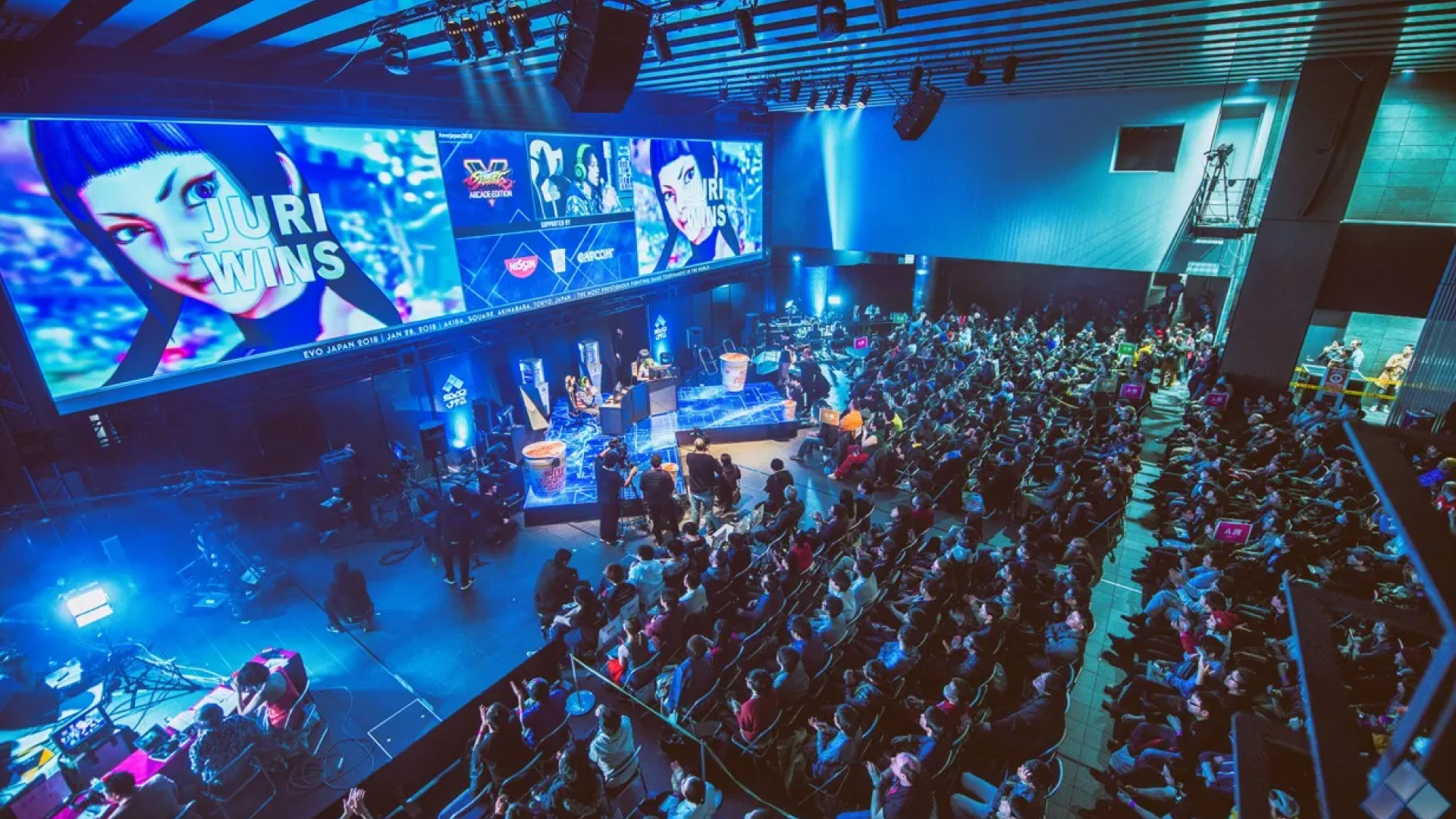
Organized by the players, and led by the Cannons, B4 was a monumental task to be undertaken. Right at a time when the community was getting smaller the tournament and corresponding USA vs Japan event have brought the tournament scene into the limelight again. As witnessed at last year's B5, when players have a venue to compete and congregate they will do so in large numbers and players will compete internationally.
Most importantly though, hopefully the film will see larger audiences outside of the SF and gaming subculture, and as such receive recognition as a legitmate lifestyle. One day, future generations will have absolutely no knowledge or experience whatsoever of the arcade generation; the film will hopefully work to preserve some of that past.
Killian: Most people don't realize- this is a "real" film, rather than just some kids with a camcorder and some spare time. Fill them in.
From the beginning of the project, we planned Bang The Machine to be an actual theatrical release, which in traditional terms means shot on film with all the glory and pain that comes along with the format. Tamara Katepoo, our esteemed Director/Producer insisted that we shoot on film to get the best visual results; there’s something a little too cold and removed about digital video, and film just frankly looks a million times better.
We chose the Super 16 format which is a widescreen version of regular 16mm – the film stock is closest thing to 35mm we could choose without bumping up the budget to enormous levels which happens with 35mm. All in all we had over a hundred hours of DV footage, and we shot over 50:1 on film which means over a hundred hours of film as well.
That’s just the visuals, on the sound front we have an original score that was composed just for the film, and we recorded gobs of digital sound during the almost 1 year production schedule. Yep, with all this material we had the makings of a real theatrical feature length movie…not some amateur video caught from a couple of tournaments.
Killian: What's your favorite SF? Do you have a favorite SF moment?
By far I have to say Super Turbo, and Alpha 3 are my favourite games. When I was younger (and not so old and slow) ST was a regular pastime like watching TV. I feel like A3 could be another ST as time goes on, with players still finding out things about the engine everyday. My favourite SF moment has to be the day I could a dragon punch in the arcade as opposed to the d-pad on a Super Nintendo…lol.
Killian: Anytime you're dealing with the SF community, if there's one thing you can be sure of it's that people will complain. No matter how amazing whatever you hand them might be, there are always 10,000 things wrong with it- I think it may have something to do with the analytical mindset common to serious players (it may also have to do with the fact that most of them are just punks). What is your biggest regret about the project?
Well, I’m a loser for not having attended either B4 or the following US vs. Japan tournament (or B5 for that matter). One of the things about being the boss is that you can’t ever leave the fort, otherwise things can get a little scary =(
The only other regrets are those based around the limitations of time and money. We would have liked to have done some shooting on the East Coast and possibly the middle of the country, but again limited funds and time made us choose a denser area like the West Coast. Similarly, it would have been nice to cover the past generation of players such as Tomo Ohira and Thomas Osaki, but a lack of archival material made us choose to cover the scene in it’s present state.
As mentioned though before there will be players that will complain about several things in the movie; many of them are based around an expectation that the film will be an accurate blow by blow of the B4 tournament with who won what and with what character, etc. They have to understand that general audiences could care less about the game itself and are more interested in the reasons why we all play SF. Believe me, once you see it you’ll understand that the people in the community and how they interact is just as interesting as the game itself.
Killian: Are people in the community usually happy with the films (or other records) about them?
I can’t really speak from experience other than with Bang The Machine, but I can speak from what I’ve read about and from talking to others with some history. There are certain kinds of documentaries where the filmmakers do not have contact with their subject matter from the simple reason that the subject matter is not alive…take for instance if you were to do a project based on the life of Martin Luther King, you’d be dealing with mostly archival material and living witnesses to his life.
With our film though we were lucky to be involved in the subculture as it was happening right in front of us and we’re pretty confident that players will enjoy our record of their experiences. However, the biggest critics of any project come from the ones who know most about it, and there will plenty for people to talk about in the film. A good analogy would be a movie like Fast and the Furious. The film’s biggest critics were those actually in the subculture of street racing in California. Numerous technical errors and mistakes were all over the place: the first drag race lasts 2 minutes as opposed to 10-15 seconds, double clutching is for road racing not drag racing, etc. Yet, most everyone at least admitted that the movie was a good thrill ride that addressed an underground lifestyle based around street racing.
BTM is obviously different since it’s a documentary, and the mere fact that we could follow the actual leaders in the community was a huge plus for us.
Killian: What do you think is the film's biggest success?
The film’s biggest success is that we finished! Seriously, with all the road blocks and setbacks we faced, we still ended up with a film that will give audiences a real taste of what all this Street Fighter mumbo jumbo is about. We managed to capture some real drama and emotion as well and that’s something we didn’t completely expect to happen. The project turned from a piece about the characters who play the game into a compelling story about the community and the players within it.
Killian: Do you feel that SF (or competitive videogames generally) are somehow fundamentally different from more traditional hobbies/sports? If not, is it just that people don't recognize the similarities? Why do you think that is?
There are obvious practical differences about traditional sports and Street Fighter, but apart from those the way in which the game unites and divides people is completely the same. You have the elite, the mere mortal and plebian players, the spectators, the groupies, and pretty soon you’ll be seeing the merchandising more and more. The mainstream consciousness does not equate high level gaming to anything other than pure geekdom at it’s worst.
I obviously disagree and people who don’t see it that way do not see the similarities. The strange thing is you can stop 100 guys on the street and ask them who Ryu, Ken and Chun Li are, chances are they will know what you are talking about…even huge PC games like StarCraft and Counterstrike don’t have that kind of recognition. Yet, most people are unaware of the competitive scene that still exists in SF; in my book, anytime you have something this large and international that contains players, followers, and participants, it’s a sport.
Killian: What surprises can people expect from the film?
For starters, many of the people in the community have never seen the likes of Alex Valle or Mike Watson in person. It will be fascinating for them to see who these people are and how they belong in the community. It will surprise people to hear some of things people say in the film about each other and the subculture of SF.
And lastly, there will opinions all over the board about the film’s more controversial topics such as the match practices at B4 and the whole Eddie Lee/Mike Watson fiasco in Japan; the great thing is the film is a documentary and viewers will get a clear understanding of the events and make up their own minds and opinions. I’m hoping it doesn’t turn into an ugly East Coast / West Coast thing, but in the words of many who play SF, a little hate is a good thing =)
Killian: Though obviously you don't know all the answers yet, can you give interested people a rough timetable of when/how/where they could expect to see the film? What congressman do people have to mail to get to see this in a theater near them?
In this case, your local congressman is actually a film distribution company. Films get picked up for distribution for many reasons, and the most likely is that they feel there is a legitimate and viable market for a particular film property. We would love it if the fans out there called, wrote, picketed, whatever they could to distribution companies out there to ask about the film and if they've seen it.
If all goes really well you will most likely see BTM in distribution at a local arthouse theatre sometime next Spring/Summer; this is if you live in one of the larger cities such as NY, LA, SF, Dallas, Chicago, Miami, etc. For everyone else, or if the film goes direct to home video, it will be on DVD sometime next year, and possibly at the end of this year. We are also thinking about doing something with SRK later this year in conjunction with another large event (hint).
Killian: Finally, what's your next big project?
We have lots of plans in the workings and a lot of them involve gaming as a subject matter. Tamara has some projects in mind, and one day I want to be involved somehow in a live-action Robotech project =)